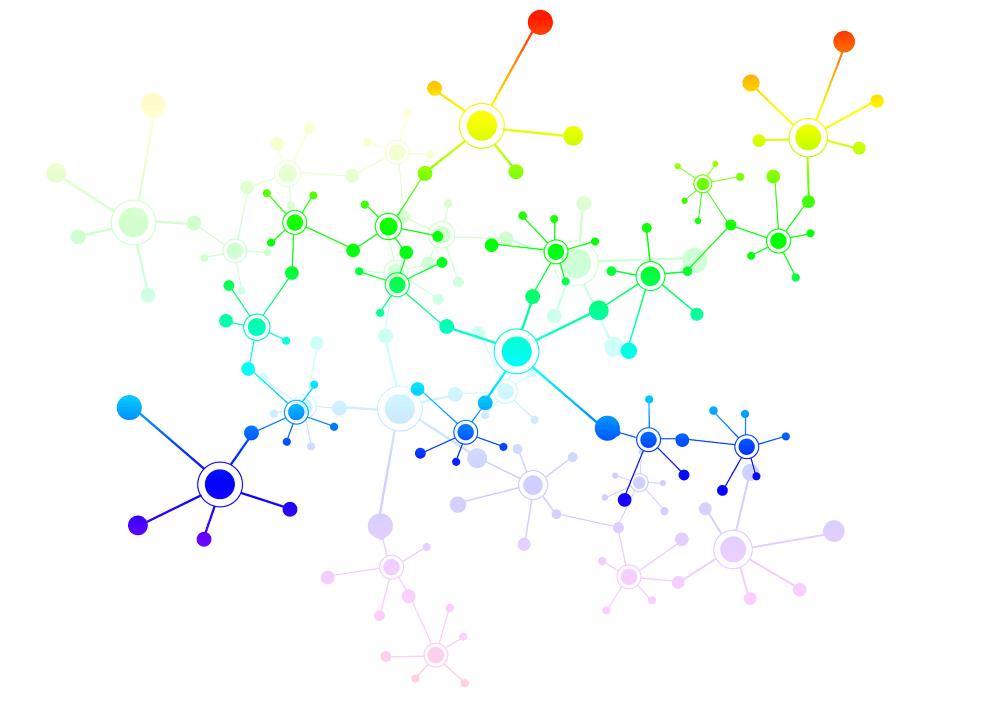
The Internet of Things is just that, things that use the internet to communicate with each other for one grand cause: a smarter, more efficient future. IoT has found its way into so many aspects of our lives that we no longer ask should we move forward, but rather, how do we move forward? The benefits of IoT are boundless. Its applications are virtually endless. IoT has integrated into consumer, commercial, industrial and infrastructure spaces, propelling vast economic development. (Cirillo, Wu, Solmaz, & Kovacs, 2019)
Consumers are well acquainted with the concept of home automation, such as heating, air conditioning, lighting, and security systems controlled through applications or standalone platforms, like Google Home or Amazon Echo. These systems save energy and provide protection. Wearable smart technology that aid health and communication are common as well, such as fit bit and the Apple Watch. Smart cars can even communicate with drivers through real time status updates, all through IoT.
The services IoT provide are not only practical, but vital as well. People with disabilities can access voice assist technology, doctors can monitor pacemakers, and medical emergencies can be detected earlier, saving lives. Smart buildings, and even smart cities, are being built to monitor and reduce energy consumption. Many IoT applications within agriculture can assess environmental factors, allowing farmers to minimize risk and waste. (Atzori et al.)
From our homes to our healthcare, IoT is here to stay.
The internet of Things relies on data collection, but where does all that data go? Data is gathered by the devices and sent via the internet to various companies where it is stored on a cloud infrastructure or a central location, compiling a record as events occur. Data is then entered into a database. A data overload can lead to data loss, which has prompted developers to create distributed database systems without a primary server. An analytics report is generated, spotting trends and conditions that allow tasks to be performed automatically. IoT requires devices to connect, communicate, send, and process data quickly. (Malek et al.)
Once data is gathered and sent, however, companies can keep it as long as they want. In some cases, companies gather more than just the data they need, which illuminates user consent issues. In its infancy, IoT has ignited a technological revolution, but has also raised cyber security, data ownership, and privacy concerns.
Atzori, Luigi, et al. “The Internet of Things: A Survey.” Computer Networks, vol. 54, no. 15, Oct. 2010, pp. 2787–2805, 10.1016/j.comnet.2010.05.010.
Malek, Y. Nait, et al. “On the Use of IoT and Big Data Technologies for Real-Time Monitoring and Data Processing.” Procedia Computer Science, vol. 113, 2017, pp. 429–434, http://www.sciencedirect.com/science/article/pii/S1877050917316903, 10.1016/j.procs.2017.08.281
Cirillo, F., Wu, F.-J., Solmaz, G., & Kovacs, E. (2019). Embracing the Future Internet of Things. Sensors, 19(2), 351. https://doi.org/10.3390/s19020351
 The Internet of Things