“Alexa, play Tom Petty’s Runnin’ Down a Dream.”
A few months ago, I would have had to stop cooking preparations, find my phone, choose a music haberdashery, and then sort through collections to find that particular song. Then resume cooking preparations. Because of the generosity of my son and his wife at Christmas time, I now enjoy the luxury of a device obeying nearly every musical whim that I can come up with.
It wasn’t always so. When my partner and I opened the pretty package and saw the Echo Dot box, we weren’t necessarily genuinely, happy with our loot. We are of the age set when we remember reading in high school English class, Aldous Huxley’s Brave New World. Big Brother saw every move, heard every word and was sovereign within every aspect of society. We of that generation were a wee bit suspicious of machines that could potentially be in complete control of our daily lives.
Our conversations prior to the gift consisted of,
“Is it really that difficult turning on and off lights manually?”
“Is it kind of creepy to think that a machine is intelligent enough to maintain an intellectual conversation?”
“Is it strange to think that AI could be part of our household, a part of our family?”
“What if the government is spying through these devices?” (Aldous Huxley really spiked our conspiracy paranoia).
Our conversations usually ended with a decision to put off getting onto the Alexa band wagon. But then, she slipped into our home and it is commonplace to depend upon her for a myriad of operations. My partner more easily shrugged off Aldous’s predictive warnings, because of the fun facts he learned about with Alexa at his fingertips. I on the other hand, enjoy her capabilities very much, but still have a lingering disquiet based on the suspicions of that age-old novel, of control being wrested out of the hands of the common man. Sigh…
IoT.
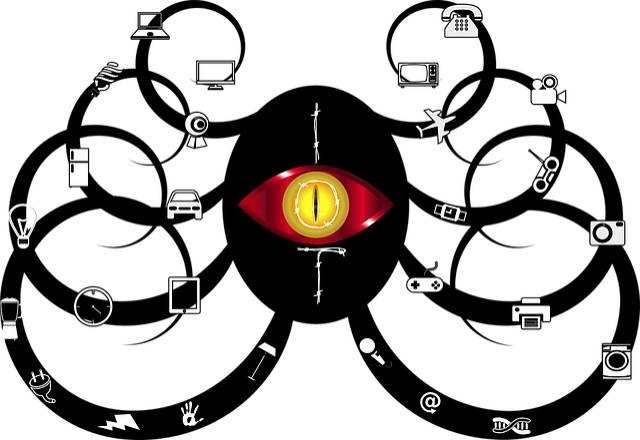
This is the gist of our ‘brave new world’ qualms. The Internet of Things is a connection of devices that are able to collect and share data via the internet. Admittedly, this is a marvelous feature in the home environment, yet in my opinion should be kept in a regulatory capacity. But let’s look outside of the home.
IoT is more widespread because of the increasing availability of broadband internet and cellular wireless networking. The interlocking culture of we humans and our things has gained us the power to devise imaginable products such as a pill bottle that reminds people to take medications that are life giving to patients who have dementia. Or, outfit a jet engine with sensors that share data showing that it is functioning safely.
And ok, the government does play in the IoT world, and it isn’t in the realm of conspiracies. When you consider that it incorporates IoT sensors into physical infrastructure such as, traffic signals for public safety, water, gas and electric meters, that provide us with modern conveniences. Along that line lays the foundation of effective transportation and engagement with citizenships. IoT’s can also regulate the capacity for clean air and water. It does this by mining the data available where it resides…on devices, and in the cloud.
Why is this important?
It is because our world has changed. It has stomped out of the industrial revolution and into the technological revolution. We need to recognize that machines have replaced human effort in many ways. That does not always mean that we have lost some of our autonomy. It just means that we have the ability to improve our circumstances on this earth through technology, because now, we have more time to imagine, invent, dream.
“Alexa, play Styx, Mr. Roboto.”
https://pixabay.com/vectors/octopus-tentacles-five-eyes-dhs-1220817/
Ranger, Steve. (2020). What Is the Iot? Everything You Need To Know About the Internet Of Things Right Now. February, 16 2020, zdnet.com,
Sas. Internet of Things. February, 16, 2020. sas.com,
https://www.sas.com/en_us/insights/big-data/internet-of-things.html
Sas. Internet of Things. February, 16, 2020. sas.com,
https://www.sas.com/en_us/solutions/iot/industry/iot-analytics-smart-cities.html
 The Internet of Things