Featured

The Internet of Things:Connection and Prevention

Patsy VanDyke

Iot, Internet Of Things, Internet, Cloud, Technology

The Internet of Things, IoT, has a significant place in the business world. As in the home, IoT works smartly, by the connectivity of a business’s electronic communication.  Thermostats that adjust the temperature according to how many people are in the room. Lights brighten, or dim when humans arrive into, or leave the room. (CDW, 2019).  Anyone could agree that the IoT positive with this aspect of device integration is that the energy being reserved saves both the company’s budget, as well as global resources.

IoT can also order printer ink before you are aware that the one attached to your office is low. (CDW, 2019). The maintenance of the devices within a business setting can be seen as a way of increasing employee performance. A sure-fire way to attain “being in the black.”

When a company uses IoT to track its inventory, real time availability generates another layer of output when customer service assures the client that the product they wish for is in stock. (CDW, 2019). With information such as this at a company’s fingertips, heighten its chances of success.

Utility and Energy companies have the luxury of using remote monitoring via IoT. This reduces costs associated with sending employees to remote locations. Within the manufacturing industry, IoT bumps productivity and detects limitations in supply chains. (CDW, 2019).

Basically, data mining itself, a company can focus on customer traffic patterns in the retail realm, and real-time tracking of vehicle fleets in the transportation industry which can forecast vehicle/transportation concerns.  

The above attributes of IoT are marvelous conveniences in the business world. Unfortunately, as with all technological advancements, the pros are riddled with cons. The largest concern of IoT is security. A series of IoT hacks can occur in the business world leaving us aware of the negative aspect of loose security oversight. 

If precaution is thrown to the wind, a hacker can infiltrate a business through the infection of its devices. Malware is introduced and it robotically scouts for other vulnerable devices, logging in using the default and password, installation is made, and it snowballs from there. One unprotected device is an open invitation. (Kilpatrick, 2018).

As an example, the medical industry was shocked by the penetration of such acts with hacked cardiac implantable pacemakers. Sharing information from the patient to the physician, the pacemaker allows the monitoring of a patient with ease. The horror here is that a patient with such a device is susceptible to a hackers whim by adjustments to its functions…depleting battery charge, and even possible fatal shocks. (Kilpatrick, 2018).

The call to action here is to ever be vigilant when it comes to embracing the qualities of IoT. The conveniences are practically essential to conduct business in todays world. Creating passwords that are strong and complex is a must. Installing a VPN on routers will assist in averting potential disaster by encrypting internet communications. (Kilpatrick, 2018).

Our technological future is ever evolving. So must our awareness of the darker side of advancement.

Citation

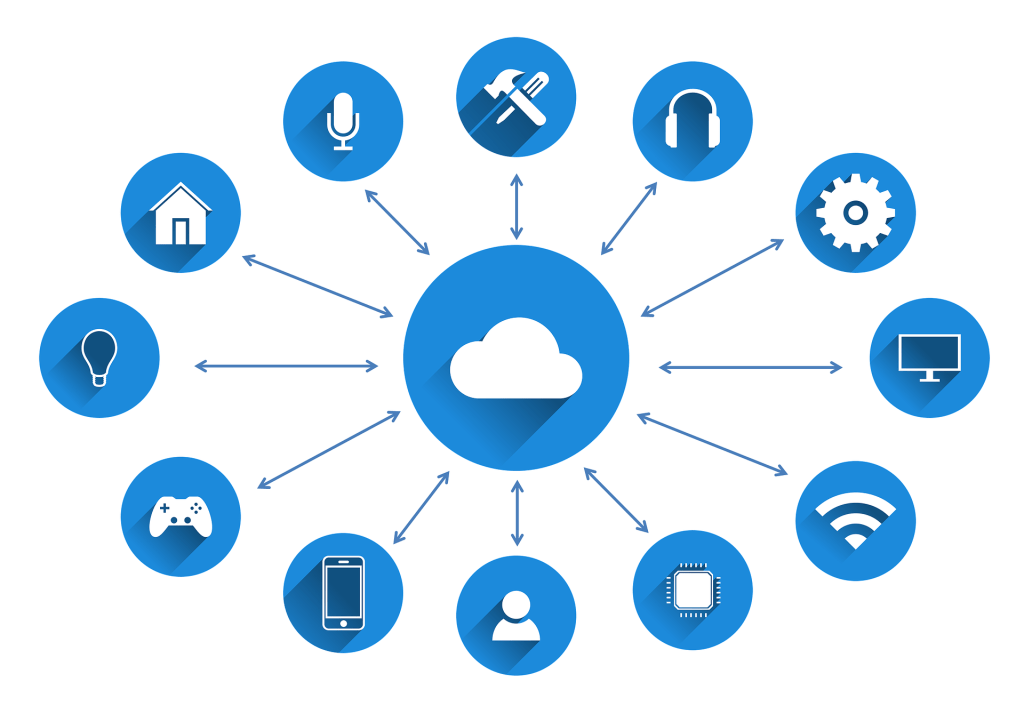
https://pixabay.com/illustrations/iot-internet-of-things-internet-4085382/

Kilpatrick, Harold. (2018). 5 Infamous IoT Hacks and Vulnerabilities. March, 2018, iotsworldcongress.com, https://www.iotsworldcongress.com/5-infamous-iot-hacks-and-vulnerabilities/

Featured

The Internet of Things is Here to Stay

The Internet of Things is just that, things that use the internet to communicate with each other for one grand cause: a smarter, more efficient future. IoT has found its way into so many aspects of our lives that we no longer ask should we move forward, but rather, how do we move forward? The benefits of IoT are boundless. Its applications are virtually endless. IoT has integrated into consumer, commercial, industrial and infrastructure spaces, propelling vast economic development. (Cirillo, Wu, Solmaz, & Kovacs, 2019) 

Consumers are well acquainted with the concept of home automation, such as heating, air conditioning, lighting, and security systems controlled through applications or standalone platforms, like Google Home or Amazon Echo. These systems save energy and provide protection. Wearable smart technology that aid health and communication are common as well, such as fit bit and the Apple Watch. Smart cars can even communicate with drivers through real time status updates, all through IoT.  

The services IoT provide are not only practical, but vital as well. People with disabilities can access voice assist technology, doctors can monitor pacemakers, and medical emergencies can be detected earlier, saving lives. Smart buildings, and even smart cities, are being built to monitor and reduce energy consumption. Many IoT applications within agriculture can assess environmental factors, allowing farmers to minimize risk and waste. (Atzori et al.) 

From our homes to our healthcare, IoT is here to stay. 

The internet of Things relies on data collection, but where does all that data go? Data is gathered by the devices and sent via the internet to various companies where it is stored on a cloud infrastructure or a central location, compiling a record as events occur. Data is then entered into a database. A data overload can lead to data loss, which has prompted developers to create distributed database systems without a primary server. An analytics report is generated, spotting trends and conditions that allow tasks to be performed automatically. IoT requires devices to connect, communicate, send, and process data quickly. (Malek et al.) 

Once data is gathered and sent, however, companies can keep it as long as they want. In some cases, companies gather more than just the data they need, which illuminates user consent issues. In its infancy, IoT has ignited a technological revolution, but has also raised cyber security, data ownership, and privacy concerns.  

Atzori, Luigi, et al. “The Internet of Things: A Survey.” Computer Networks, vol. 54, no. 15, Oct. 2010, pp. 2787–2805, 10.1016/j.comnet.2010.05.010. 

Malek, Y. Nait, et al. “On the Use of IoT and Big Data Technologies for Real-Time Monitoring and Data Processing.” Procedia Computer Science, vol. 113, 2017, pp. 429–434, http://www.sciencedirect.com/science/article/pii/S1877050917316903, 10.1016/j.procs.2017.08.281 

Cirillo, F., Wu, F.-J., Solmaz, G., & Kovacs, E. (2019). Embracing the Future Internet of Things. Sensors19(2), 351. https://doi.org/10.3390/s19020351 

Featured

Introduction to The Internet of Things

The Internet of Things is a topic that is only ever growing in importance as our world looks to technology more and more. From your smartphone to your Apple Watch to your wi-fi capable washing machine, most to all of your technology is related to The Internet of Things. As Forbes describes it, The Internet of Things (or IoT for short) “is the concept of basically connecting any device with an on and off switch to the Internet (and/or to each other)” (Morgan). It exists as a network with a wide variety of devices interacting with each other. As we move forward this network is only going to grow and become increasingly more important to our day to day lives. 

Though many of us have not heard of the IoT, it is nowhere near a new concept. The actual wording of “The Internet of Things” has been in existence for only 22 years, but that is not where it began. In reality the concept of the IoT has been around since at least the 70’s. The IoT did take some times to catch on, but after a while people began to see the potential of a world connected in every way. By October 2013, there were projections that after just seven more years the IoT would have created a successful market that would be worth about $8.9 trillion. (Lueth) 

However, not everyone is sold on the idea of the IoT. Many people wonder why everything has to be connected to one another and what it is truly being used for. The answer is simple: innovation. There were people who asked why our phones needed internet access when we had computers and people who asked why cars needed seatbelts in the back when they’d gotten along so far without them. Just because we have lived one way for a long time does not mean an improvement cannot be made. Even when these improvements seem unnecessary like wi-fi washer machines, they are paving the way for advancements we can’t even imagine. According to WIRED, “[o]ne study estimates 35 per cent of US manufacturers are using data from smart sensors within their set-ups already” (Burgess).There is no telling where the IoT will take us, but just because we cannot imagine that does not mean it has no value. Apart from questioning its purpose, people also have genuines concerns about the IoT. These concerns surrounding the IoT mostly involve the security of its users. These security problems stem from part of the IoT such as data sharing, lack of encryption, side channel attacks, and more (Mansuri). It is necessary for these concerns to be faced, but they do not devalue the IoT. The IoT is the future despite its flaws, and hopefully this generation will get to see what it becomes. 

Works Cited

Burgess, Matt. “What is the Internet of Things? WIRED explains.” WIRED, 16 Feb. 2018, wired.co.uk/article/internet-of-things-what-is-explained-iot

Lueth, Knud Lasse. “Why the Internet of Things is called Internet of Things: Definition, history, disambiguation.” IoT-Analytics, 19 Dec. 2014, iot-analytics.com/internet-of-things- definition/

Mansuri, Shahid. “10 IoT security concerns to keep in mind before developing apps.” Peerbits, peerbits.com/blog/10-iot-security-concerns-to-keep-in-mind-before-developing-apps.html

Morgan, Jacob. “A Simple Explanation Of ‘The Internet Of Things.’” Forbes, 13 May 2014, forbes.com/sites/jacobmorgan/2014/05/13/simple-explanation-internet-things-that-anyone-can-understand/#1e6133551d09 

Tesla and IoT

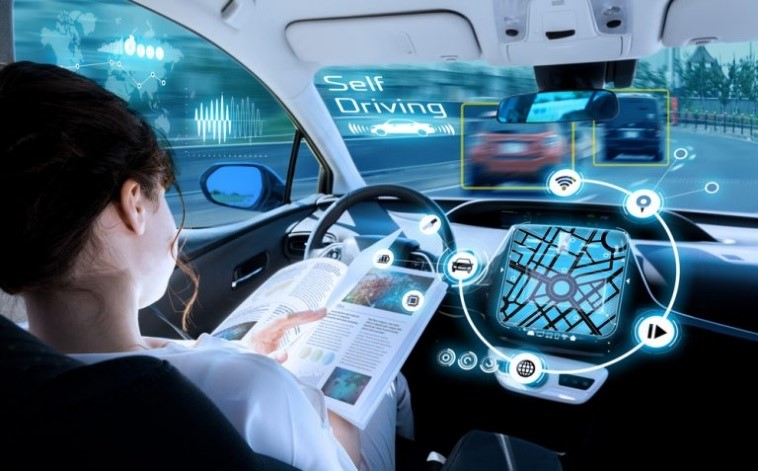
With Tesla cars sweeping across the united states, its not a surprise that they are evolving themselves with the IoT. Tesla has been able to attract a large amount of positive attention by releasing a very eye-catching car that can interact with the consumer. The new Tesla vehicles can respond to commands from the owner’s phone. if the car is parked next to a puddle, the owner can move the electric car forward as far as its needed. The vehicles are also always aware of what is going on around them while on the road. Rachelle Petusky, manager of Research & Market Intelligence, Cox Automotive Mobility Group said on Forbs “They’ve done a wonderful job at presenting themselves as the innovative leader of electric vehicles.” Tesla continues to do things to set them apart from other electric vehicle including the auto piolet function. Drivers can select a destination and then completely rely on the vehicle to get them to their destination safely. Tesla has also been aware of situations their users are in. During Hurricane Irma, they reprogrammed all Teslas’ in that area and gave them more range on their batteries to ensure they make it to safety. Forbs says, “Tesla was able to complete a mandated fix of charger plugs on more than 29,000 vehicles via a software update.” This was a big advantage for them since they saved a bunch of time for their customers. Tesla’s genius approach to their problems helps them stay in front of their competition.

https://www.forbes.com/sites/edgarsten/2019/08/19/tesla-is-ev-brand-awareness-juggernaut-compared-to-competition/#61d766d32dc2

How IoT is Building Smarter Cities

The relationship between individuals and their environment has been elevated and enhanced by the internet of things, which has facilitated the interconnectivity of services and users like never before.  The advent of “Smart Cities” pushes the boundaries of the internet of things, proving its capabilities beyond the user’s home. With an ever-increasing population and constant urbanization, can Smart Cities provide a sustainable and efficient solution?

An estimated 55% of the world’s population lives in cities and urban areas, a trend that will increase by 68% by 2050. Over the next three decades, cities are projected to add yet another 2.5 billion more people to the world’s population (un.org). As densely populated areas continue to grow, public services struggle to keep up. The enormous pressure of rapid growth and migration has expedited the need for efficient city management, prompting the delegation of Smart City initiatives. These initiatives require the rapid coordination of data sharing and decision making. IOT plays a key part in the fruition of shared strategic vision required to create a Smart City, as billions of sensors connect to the internet to achieve efficient and effective resource management (Armando et al, 2012).

What sort of solutions arise when citizens are offered a single platform for services that involve multiple government entities? The benefits span from law enforcement to pollution management.

In the last ten years, the integration of law enforcement has grown exponentially. Wearable technologies for law enforcement agents allow for real-time updates, reducing crime rates and fatalities by 10%. For example, Sacramento, CA utilizes real-time crime mapping using Police Observation Devices (POD), enabling law enforcement to prevent criminal activity, saving an estimated 300 lives per year. POD’s can link new information to existing criminal investigations to find patterns and leads quickly. IOT has mobilized police officers by collecting large amounts of data that can be analyzed in a single click (cpoa.org).

Solar powered, censor enabled bins allow trash collectors to track waste levels and optimize fuel usage, reducing greenhouse emissions by 15%. IOT has enabled cities to reduce water consumption and revolutionize irrigation systems. For example, Chicago has implemented an experimental project known as an “Array of things”. By installing devices around the city, real-time information about the environment, infrastructure and activity can be collected and interpreted. These innovations show long term results, such as increased air quality after investments in clean energy, or decreased noise pollution after changes in zoning. The initiative brings researchers, policies, planners, and residents together to take specific actions towards healthier cities (weforum.org). In 2015, the Department of Transportation issued a Smart City challenge, asking mid-sized cities across the United States to propose the use data, applications and technology to efficiently

transport people and goods. The response was overwhelming, as 78 cities shared their ideas for innovation. The Department of Transportation has invested nearly $350 million in Smart Cities and advanced transportation technologies to bring those ideas to life. Atlanta proposed multi-model transportation centers to serve as hubs for mobility and economic activity. Las Vegas recommended autonomous shuttles and solar powered vehicle charging stations to reduce emissions. New Orleans proposed dynamically routed, on-demand mini-busses to provide affordable transportation to underserved communities.

Columbus, Ohio won. They proposed to introduce autonomous vehicles to neighborhoods where unemployment rates are high, providing access to job centers. This initiative hopes to provide low income families access to better healthcare and essential services. Columbus also plans to implement transit cards to grant low income communities the ability to access ride-hailing and car-sharing services, even if they don’t own a smartphone or a bank account (transportation.gov).

The initiatives made possible by IOT are promising and exciting. As population size, crime rate, and pollution continue to strain resources, Smart Cities and affiliated technologies offer dynamic and comprehensive solutions.

Aldama-Nalda-Hafedh Chourabi-Theresa Pardo-J. Gil-Garcia-Sehl Mellouli-Hans Scholl-Suha Alawadhi-Taewoo Nam-Shawn Walker (2012, June). Pages 289-290

Around 2.5 Billion More People Will Be Living in Cities By 2050, Projects New Un Report | Un Desa Department Of Economic and Social Affairs. (2018, May 16). Retrieved from

https://www.un.org/development/desa/en/news/population/2018-world-urbanization-prospects.html

Kranz, M. (2018, March). 6 ways the Internet of Things is improving our lives. Retrieved from https://www.weforum.org/agenda/2018/01/6-ways-the-internet-of-things-is-improving-our-lives/.

Smart City Challenge. (2016, August 3). Retrieved from https://www.transportation.gov/smartcity.

3 Impacts on the Internet of Things (IoT) on Policing. (2017, November 1). Retrieved from https://cpoa.org/3-impacts-internet-things-iot-policing/.

The Internet of Things: Pros and Cons

Dana Rodriguez

One could pick pretty much any topic, and people would rally both in favor of and in opposition to it. Everything has its pros and its cons, and The Internet of Things is no exception to this. People have been debating the advantages and disadvantages of the IoT, both sides making valid points, and it leaves people wondering. When seeing all the information from both sides, people ask themselves if IoT is really a good or a bad thing? To even attempt to answer that question, we have to look at both sides of the argument. 

The first side of the argument is the side that claims that the pros of the IoT outweigh the cons. What exactly are these pros? Well, there’s a lot. It opens up a world of opportunities in more than one way. The means to communicate are made stronger than ever through the IoT, both machine to machine, person to person, and machine to person. The idea of being connected is a core part of the IoT. In a system where all these devices exist in contingence with one another, a complex, tangled web of thoughts, ideas, data, etc. being shared with one another is bound to be created. The machine to person aspect of this connection also means that people will have more access than ever to information. Communication is a vital means to innovation, and in a network like IoT, communication will almost certainly become a catalyst to all kinds of ideas we can not even imagine. One big piece of this innovation is automation. The IoT is making technology smarter, even making it smart enough to take over human tasks. Automating human jobs could lead to better, quicker, and more effective work in many aspects of our lives. It could lead to groundbreaking transformation in fields such as medicine that has the potential to change society at its core. In this and other ways, the IoT could take us places we have never been before. Debatably best of all, the IoT is cost-effective. The IoT is taking the cost out of the fields it is approving. Accessing information, communicating, doing jobs, etc. is all quicker, and more accessible than ever, cutting out the time and cost that old methods of doing these things presented. Still, there are disadvantages to consider.

The IoT is not all rainbows and unicorns, and there is plenty of ground to make an argument against it. Perhaps the most rallied behind concern in regards to the IoT is security. Everyone has heard horror stories of people sharing just a little bit too much on the internet: having their information sold off social medias such as Facebook, accidentally giving their information away through scams, even having their devices hacked. While younger generations are getting more accustomed to the world of over-sharing, most people still hold concerns about the security of their personal information and take precautions to protect it. With the IoT being able to access so much information, it raises the concerns of said information falling into the wrong hands. Another concern is exactly where the innovation will take us. While surely some people are just scared of robots taking over and destroying society, the concern of technology taking over is rooted in a much more realistic place. If automation picks up, corporations will inevitably jump at the chance of unpaid labor. This will leave less jobs for people who actually need them, and many will be left unemployed. These are just a few of the concerns people have about the IoT.

Finally, we get to answering the question of whether the IoT is a good or a bad thing. My answer is this: you tell me. While I personally see that the IoT has more advantages than disadvantages, the disadvantages are not without stock and it would be foolish for us to simply brush them under the rug. However, if we are careful with how we proceed, the IoT, which has already become invaluable, could further change our lives for the better. I urge you to take in all the facts and see for yourself what it is the IoT has to offer.

Works Cited

Lath, Anuja. “Pros and Cons of Internet of Things.” BBN News, 5 Aug. 2018, bbntimes.com/companies/pros-cons-of-internet-of-things

Internet of Things

In 2017 more than eight billion Internet of Things (IoT) devices were used, and a projected 20 billion or more IoT devices will be used in 2020 (Security Review of Consumer Home Internet of Things (IoT) Products). The Internet of Things represents a diverse technology and usage without knowing the business opportunities and risks. The Internet of Things is changing the dynamics of security industry. It allows data to be transferred seamlessly from a physical devise to the internet. The growth of number of intelligent devices will create a network full of information that allows supply chains to assemble and communicate in new ways. Many new companies are venturing out into the new competitive market of security doorbells. Security doorbells are a newer technology that has allowed homeowners to feel more comfortable in their homes. In the early 1900’s the first doorbell was invented, and we have come a long way since then. Americans have become so concerned with crime; they are installing video doorbells at their homes for added security. With this new technology in our hands we can see who is at the door without opening the door. If someone is near your door a notification is sent to your smartphone. You then could talk to them if that’s needed. If for instance its someone breaking in and you’re not home, you have the ability to sounds a silent alarm for local law enforcement. The security doorbells’ main objective is to prevent and detect any crime.

Having all of these advantages at the tips of our fingers is amazing. Americans around the country are feeling safer with a security doorbell installed. The device itself is different from company to company but they all have top of the line cameras for detailing individuals. The range of the camera is very impressive as well. With any security doorbell you can see a full 180-degree view.

As seen in figure 1.

Home security systems are a new technology since they have been around for 8-10 years. I can see this concept of home protection monitors skyrocketing in the next 5 years. Many more Americans are seeing the added benefits of installing a home security doorbell at their house. Internet of Things is on the rise, I am very interested to see where our lives go, co-evolving with this technology.

https://patents.google.com/patent/US10009520B2/en  (Figure 1)

https://ieeexplore.ieee.org/abstract/document/7380718

https://csrc.nist.gov/publications/detail/nistir/8267/draft

The Internet of Things and It’s Many Tentacles

“Alexa, play Tom Petty’s Runnin’ Down a Dream.” 

A few months ago, I would have had to stop cooking preparations, find my phone, choose a music haberdashery, and then sort through collections to find that particular song. Then resume cooking preparations. Because of the generosity of my son and his wife at Christmas time, I now enjoy the luxury of a device obeying nearly every musical whim that I can come up with. 

It wasn’t always so. When my partner and I opened the pretty package and saw the Echo Dot box, we weren’t necessarily genuinely, happy with our loot. We are of the age set when we remember reading in high school English class, Aldous Huxley’s Brave New World. Big Brother saw every move, heard every word and was sovereign within every aspect of society. We of that generation were a wee bit suspicious of machines that could potentially be in complete control of our daily lives. 

Our conversations prior to the gift consisted of, 

“Is it really that difficult turning on and off lights manually?” 

“Is it kind of creepy to think that a machine is intelligent enough to maintain an intellectual conversation?” 

“Is it strange to think that AI could be part of our household, a part of our family?”

“What if the government is spying through these devices?” (Aldous Huxley really spiked our conspiracy paranoia).

Our conversations usually ended with a decision to put off getting onto the Alexa band wagon. But then, she slipped into our home and it is commonplace to depend upon her for a myriad of operations. My partner more easily shrugged off Aldous’s predictive warnings, because of the fun facts he learned about with Alexa at his fingertips. I on the other hand, enjoy her capabilities very much, but still have a lingering disquiet based on the suspicions of that age-old novel, of control being wrested out of the hands of the common man. Sigh…

IoT.

This is the gist of our ‘brave new world’ qualms. The Internet of Things is a connection of devices that are able to collect and share data via the internet. Admittedly, this is a marvelous feature in the home environment, yet in my opinion should be kept in a regulatory capacity. But let’s look outside of the home.

IoT is more widespread because of the increasing availability of broadband internet and cellular wireless networking. The interlocking culture of we humans and our things has gained us the power to devise imaginable products such as a pill bottle that reminds people to take medications that are life giving to patients who have dementia. Or, outfit a jet engine with sensors that share data showing that it is functioning safely. 

And ok, the government does play in the IoT world, and it isn’t in the realm of conspiracies. When you consider that it incorporates IoT sensors into physical infrastructure such as, traffic signals for public safety, water, gas and electric meters, that provide us with modern conveniences. Along that line lays the foundation of effective transportation and engagement with citizenships. IoT’s can also regulate the capacity for clean air and water. It does this by mining the data available where it resides…on devices, and in the cloud. 

Why is this important?

It is because our world has changed. It has stomped out of the industrial revolution and into the technological revolution. We need to recognize that machines have replaced human effort in many ways. That does not always mean that we have lost some of our autonomy. It just means that we have the ability to improve our circumstances on this earth through technology, because now, we have more time to imagine, invent, dream.

“Alexa, play Styx, Mr. Roboto.

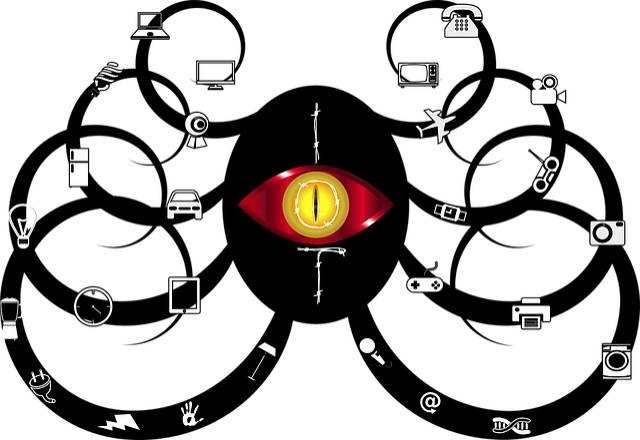
https://pixabay.com/vectors/octopus-tentacles-five-eyes-dhs-1220817/

Ranger, Steve. (2020). What Is the Iot? Everything You Need To Know About the Internet Of Things Right Now. February, 16 2020, zdnet.com, 

https://www.zdnet.com/article/what-is-the-internet-of-things-everything-you-need-to-know-about-the-iot-right-now/

Sas. Internet of Things. February, 16, 2020. sas.com,

https://www.sas.com/en_us/insights/big-data/internet-of-things.html

Sas. Internet of Things. February, 16, 2020. sas.com,

https://www.sas.com/en_us/solutions/iot/industry/iot-analytics-smart-cities.html

Introduce Yourself (Example Post)

This is an example post, originally published as part of Blogging University. Enroll in one of our ten programs, and start your blog right.

You’re going to publish a post today. Don’t worry about how your blog looks. Don’t worry if you haven’t given it a name yet, or you’re feeling overwhelmed. Just click the “New Post” button, and tell us why you’re here.

Why do this?

  • Because it gives new readers context. What are you about? Why should they read your blog?
  • Because it will help you focus you own ideas about your blog and what you’d like to do with it.

The post can be short or long, a personal intro to your life or a bloggy mission statement, a manifesto for the future or a simple outline of your the types of things you hope to publish.

To help you get started, here are a few questions:

  • Why are you blogging publicly, rather than keeping a personal journal?
  • What topics do you think you’ll write about?
  • Who would you love to connect with via your blog?
  • If you blog successfully throughout the next year, what would you hope to have accomplished?

You’re not locked into any of this; one of the wonderful things about blogs is how they constantly evolve as we learn, grow, and interact with one another — but it’s good to know where and why you started, and articulating your goals may just give you a few other post ideas.

Can’t think how to get started? Just write the first thing that pops into your head. Anne Lamott, author of a book on writing we love, says that you need to give yourself permission to write a “crappy first draft”. Anne makes a great point — just start writing, and worry about editing it later.

When you’re ready to publish, give your post three to five tags that describe your blog’s focus — writing, photography, fiction, parenting, food, cars, movies, sports, whatever. These tags will help others who care about your topics find you in the Reader. Make sure one of the tags is “zerotohero,” so other new bloggers can find you, too.

Design a site like this with WordPress.com
Get started